
Colonial Era Dressing and Attire in Revolutionary Morris County
The 18th century, like any other time, saw fashion determined by nationality and economic status. Many reenactors have clothing for fancy events as well as simpler clothing for camping or re-encampments. The following guide walks through appropriate options for both, all suitable for Morris County 250th events.
Women’s Colonial Attire
Understanding the Silhouette
One distinctive feature of 18th-century women’s clothing is the added width at the hips. While this may feel unfamiliar today, it was central to achieving the correct period silhouette. The added width emphasizes the waist, creating a smaller and more defined appearance.
Underpinnings
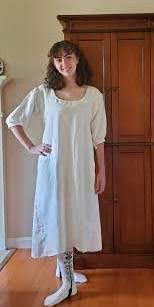
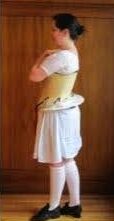
Underpinnings typically consisted of a shift, stays, and panniers. While not everyone will choose to wear all of these elements, understanding them helps create an accurate look.
Shift
A shift is a wide-necked, simple undergarment similar to a nightgown. It acts as the base layer, keeping sweat and lacings away from the body and protecting outer garments. A simple alternative can be a modified oversized T-shirt.
Stays
Stays functioned similarly to a corset. In the 18th century, wearing stays was considered essential for both modesty and posture. They were less about shaping the figure and more about supporting proper posture and elegance. If opting not to wear stays, maintaining upright posture is especially important.
Panniers
Panniers were used to expand the width of the hips. In Europe, they could be extremely wide for court events, while in America they were typically more modest. The width should correspond with the formality of your outfit. A small hip roll can serve as a simpler alternative.


Gowns, Petticoats, and Jackets
The range of styles is broad. While elaborate gowns are an option, simpler styles are historically appropriate and often more practical.
Gowns
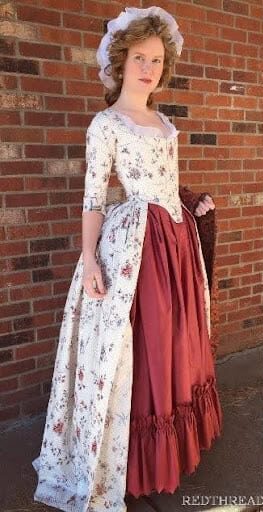
Most gowns consisted of two pieces:
- A petticoat (underskirt)
- A gown worn like a coat, often with a half-skirt attached at the back
The gown is worn over a matching or contrasting petticoat that often shows in the front. A common guideline is prints paired with solid petticoats unless fabrics match exactly. Both contrasting and matching petticoats were historically accurate.
Snappy Separates
An alternative to a full gown is a petticoat paired with a jacket. This option offers flexibility and may allow use of modern closet pieces.
Examples:
- A full floor-length skirt can function as a petticoat
- A simple, low-cut jacket may work
- A short “bed jacket” style (similar to a kimono with narrower sleeves) can be used
An apron helps secure and complete the look.



Accessories
Accessories enhance authenticity and add personality to your ensemble.
Caps
Married women typically wore caps daily, except at formal balls where decorative headpieces were substituted. Period caps were flattering and worn off the face. Choose a style that enhances your appearance.
Shoes
Shoes were low-heeled and fastened with buckles or bows. Decorative bows can be added to modern shoes for a period-inspired look.
Gloves, Mitts, Fans, Jewelry, and Glasses
All are appropriate additions and can elevate your outfit.
Wigs and Hair
In Revolutionary America, wigs were generally discouraged as they were viewed as English imports. However, powdered hair was common


Shopping Sources
There are options available across many price points, from budget-friendly costumes to artisan-made, historically accurate garments and specialty footwear retailers.
Men’s Colonial Attire
Full-length trousers were not widely introduced until the late 1780s, so they are generally not appropriate for earlier Revolutionary-era portrayals.
Typical men’s attire included:
- Shirt
- Vest or waistcoat
- Jacket
- Breeches
- Stockings
- Shoes or boots
For accurate options, specialty historical clothing retailers are recommended.



Join the celebration! Sign up for 250th Anniversary news.